Breaking the Language Barrier: Do Translator Earbuds Actually Work?
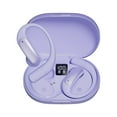
For decades, science fiction has promised us a “Universal Translator”—a device that instantly turns alien gibberish into clear English. From Star Trek to The Hitchhiker’s Guide to the Galaxy, the dream of seamless communication has always been just around the corner.
Enter translator earbuds. Brands like Timekettle, Google, and Samsung claim that the future is here. But before you book a one-way ticket to a remote village in Tibet, you probably want to know: Do they actually work?
The short answer: Yes, but with some significant “howevers.”
Here is a deep dive into the reality of translation technology in 2024.
- * *
How Do They Work?
Translator earbuds aren't actually doing the “thinking” inside the silicone tip. Instead, they act as a bridge between your ears and your smartphone.
- The Pickup: The earbud microphone captures the speech.
- The Cloud: The audio is sent via Bluetooth to an app on your phone, which uploads it to a translation engine (like Google Translate, Microsoft Azure, or DeepL).
- The Delivery: The translated text is converted back into speech and beamed into the receiver’s earbud or played through the phone speaker.
The Pros: Where They Shine
1. Convenience for Travelers
If you’re trying to check into a hotel in Tokyo or order a specific dish in Rome, these earbuds are a game-changer. They are much more natural than passing a phone back and forth and typing into a screen.
2. Multiple Modes
Modern earbuds (like the Timekettle WT2 or Google Pixel Buds) offer different modes:
- Touch Mode: You touch the bud, speak, and the translation plays in the other person's ear.
- Listen Mode: Great for lectures or speeches where you just need to understand what’s being said.
- Speaker Mode: You wear the buds, but the translation plays out of your phone’s speaker so the other person doesn’t have to put a stranger’s earbud in their ear.
3. Rapid Improvement
AI and LLMs (Large Language Models) are making translations more natural. We are moving away from “robot talk” and toward nuanced, grammatically correct sentences.
- * *
The Reality Check: The Limitations
1. The “Latency” Lag
Even with a 5G connection, there is almost always a delay. It can range from 0.5 to 3 seconds. While that sounds fast, it’s just enough to make a “natural” conversation feel slightly awkward and stop-and-start.
2. The Internet Dependency
Most high-end translation happens in the cloud. If you are in a basement subway in Paris or a rural forest with no signal, your expensive earbuds become regular headphones. While some brands offer “offline packs,” their accuracy is significantly lower than the online versions.
3. Background Noise is the Enemy
Translator earbuds rely on clear audio. If you’re at a busy street market or a loud festival, the microphones often struggle to distinguish your voice from the crowd, leading to hilarious (or frustrating) mistranslations.
4. Lost in Translation (Nuance & Slang)
AI is great at literal translation, but it still struggles with:
- Idioms: If you say “it’s raining cats and dogs,” the AI might literally tell a confused Spaniard that household pets are falling from the sky.
Tone: Sarcasm and humor rarely translate well through a computer-generated voice.
- *
The Verdict: Should You Buy Them?
Buy them if: You are a frequent international traveler, an expat living in a new country, or someone who frequently conducts simple business transactions in multiple languages. They are a fantastic safety net and a bridge to basic communication.
Skip them if: You are expecting a 100% fluent, real-time “Babel Fish” experience for deep philosophical debates or high-stakes legal negotiations. best translator earbuds 2025 isn't quite there—yet.
Final Thought
Translator earbuds are an incredible tool, but they aren't a replacement for the human element. Learning a few basic phrases like “Hello,” “Thank you,” and “Where is the bathroom?” in the local tongue goes a long way. Use the earbuds to fill the gaps, but use your own voice to make the connection.
What do you think? Would you trust a pair of earbuds to help you navigate a foreign country? Let us know in the comments!